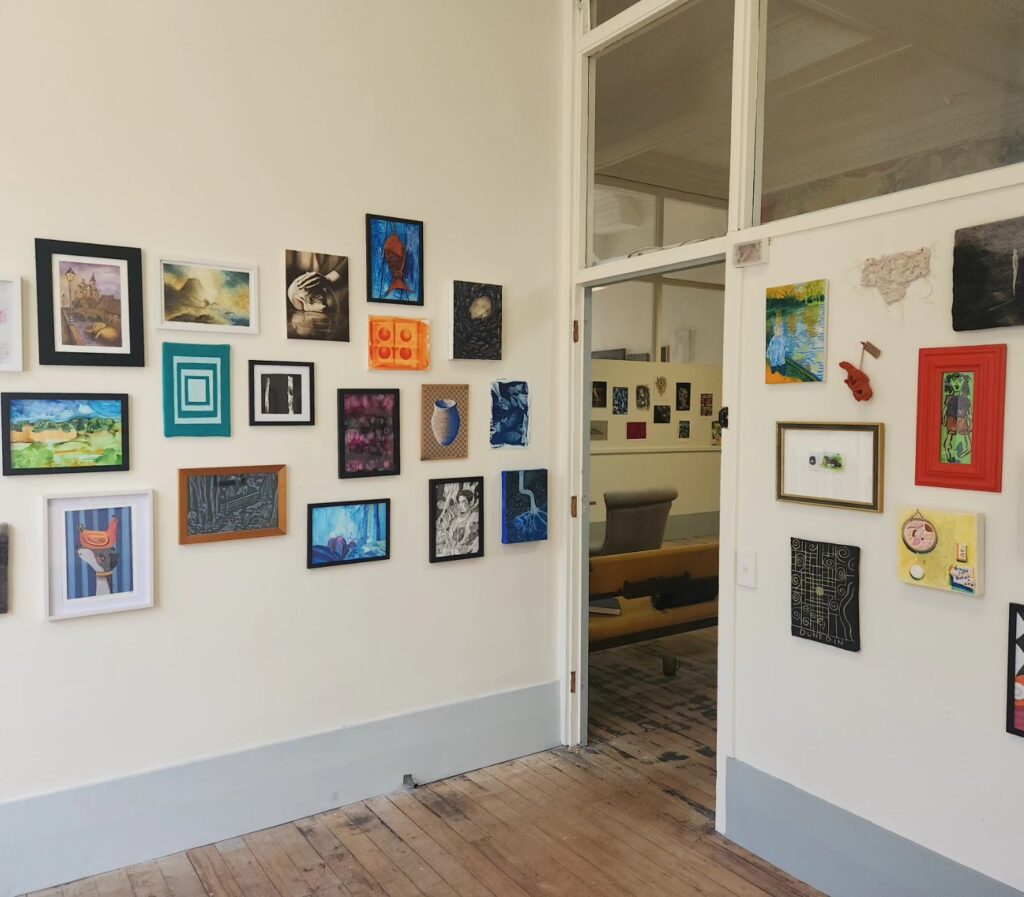
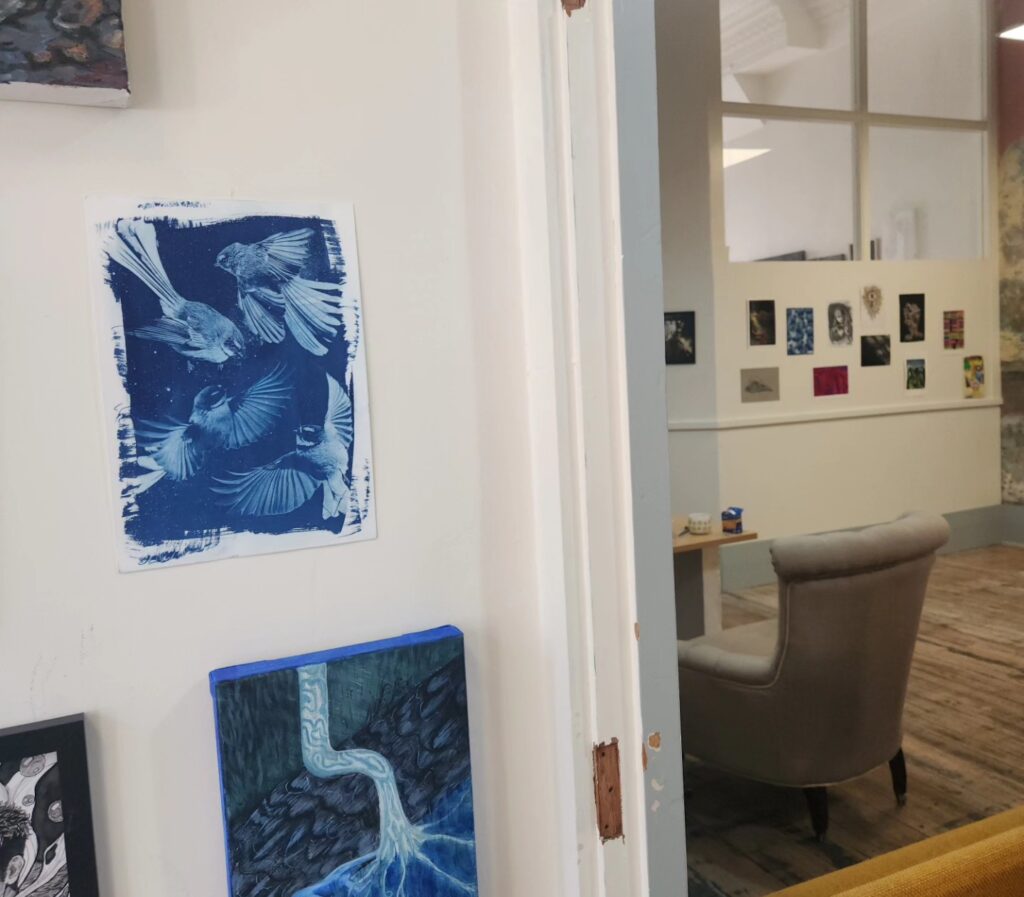
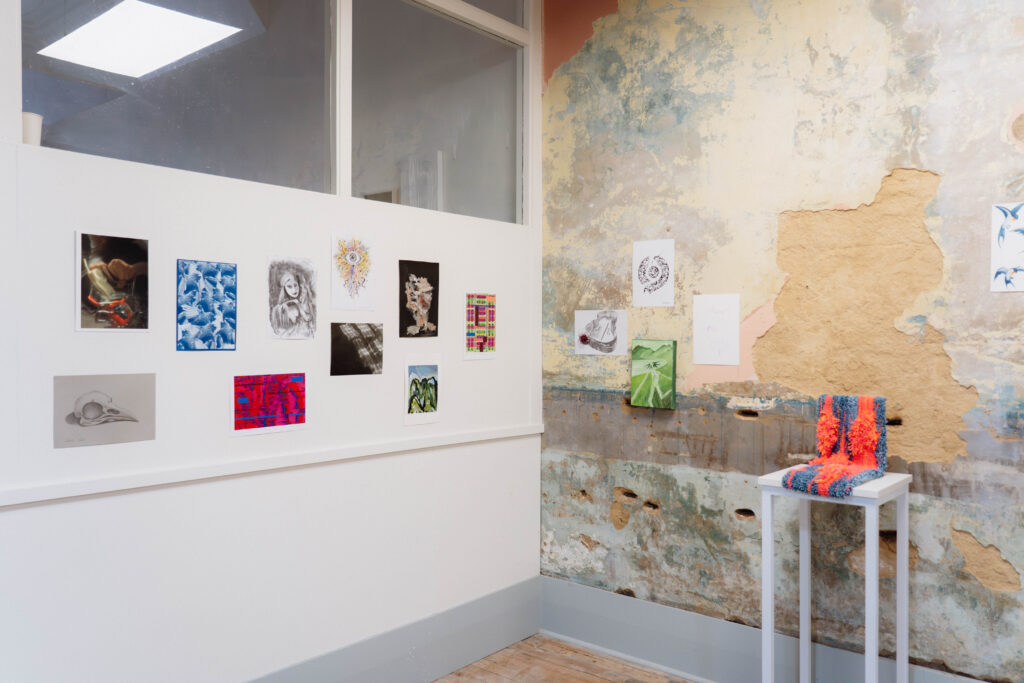
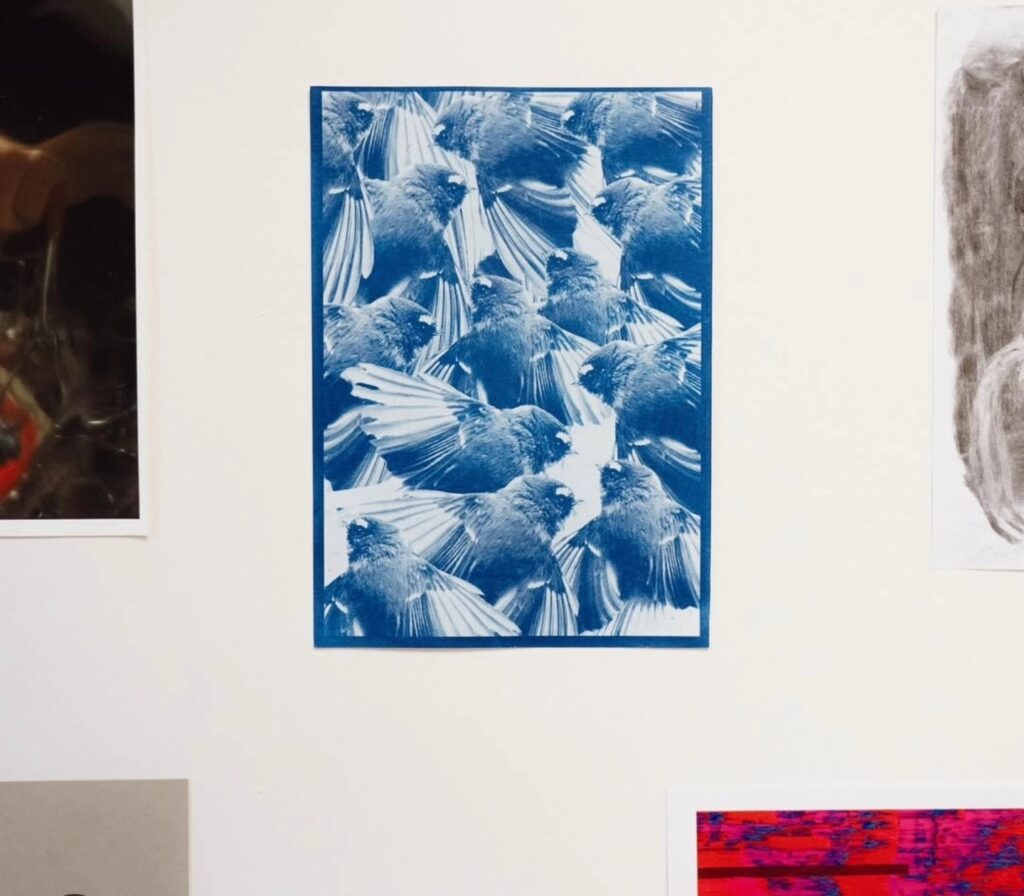
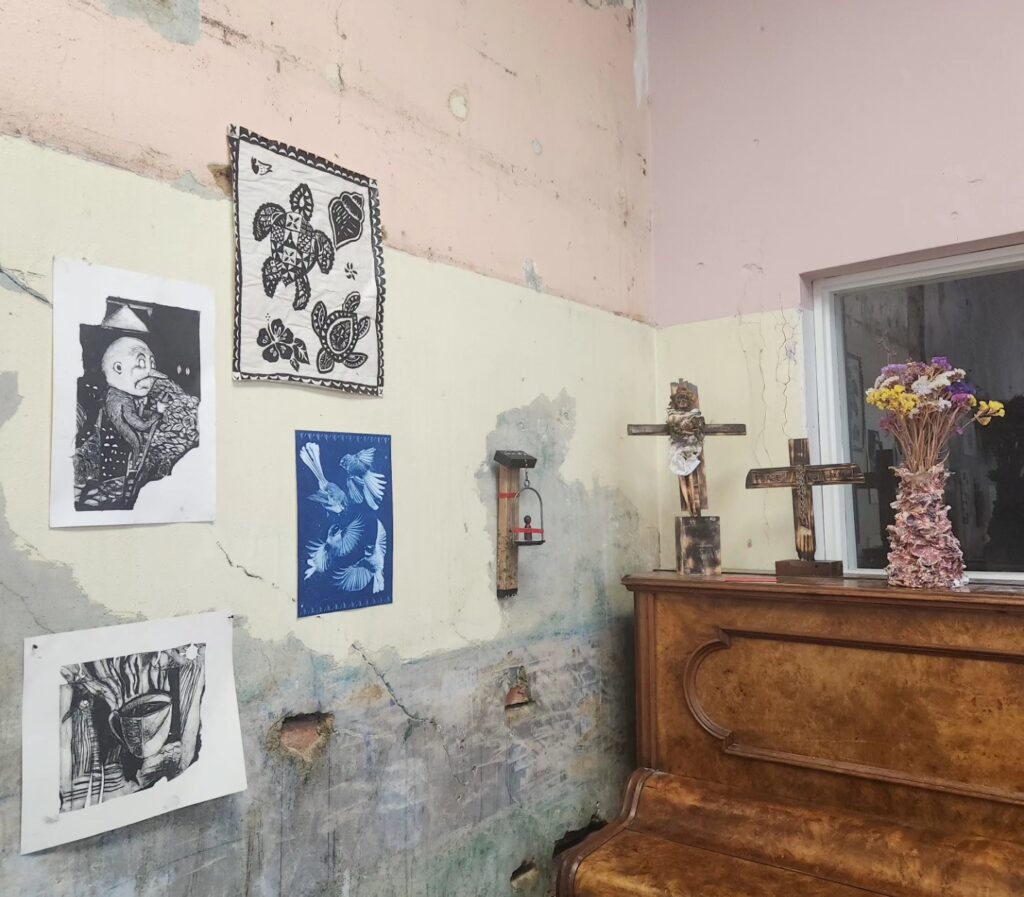
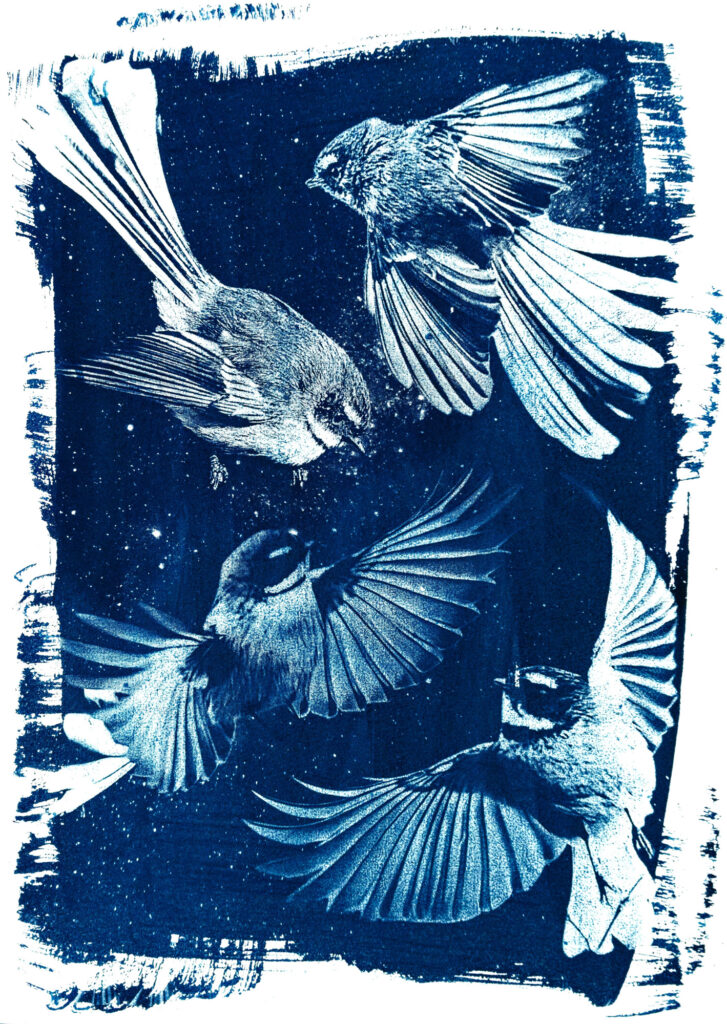
For this fundraiser show, I submitted three artworks using the cyanotype process. They were an evolution of previous work I had created for The Learning Connexion’s “Matariki Flag” installation in winter 2025. They were a celebration of our pīwakawaka, imbued with a hope that we can work towards a more abundant future. Two works sold during the exhibition, but prints of the work are available for purchase (see below).
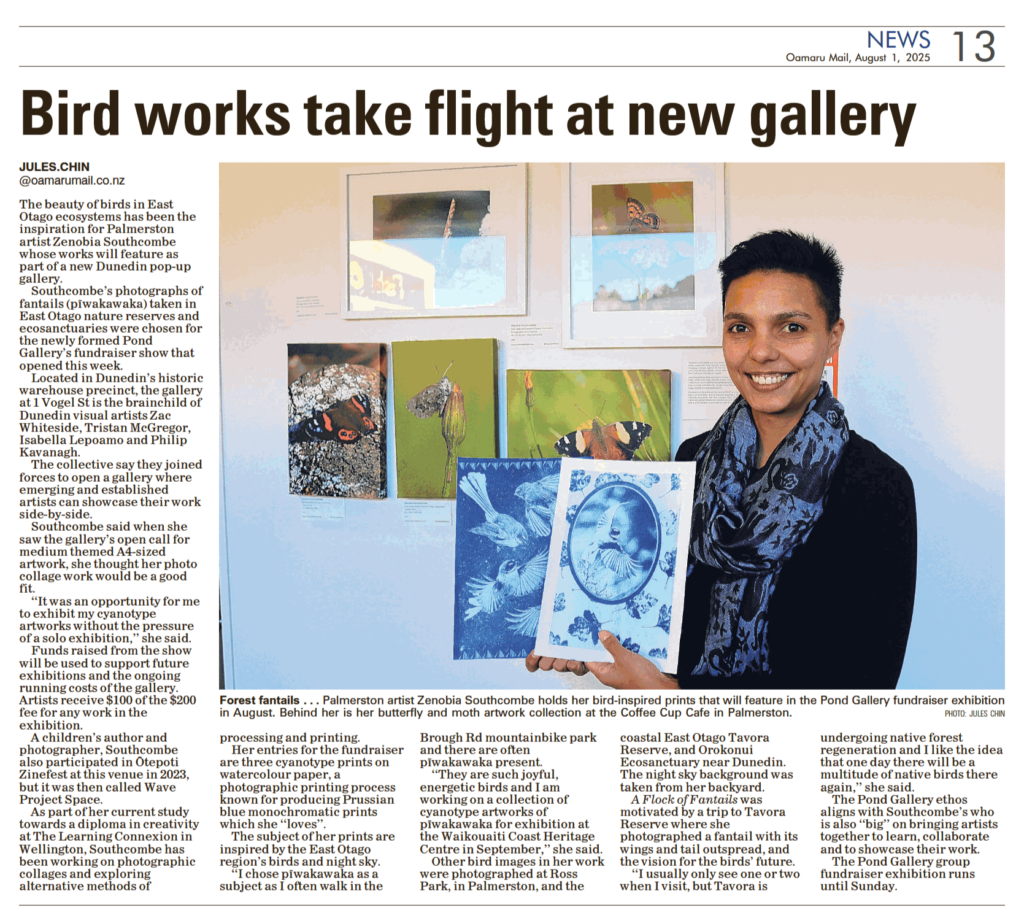
Media Feature: Ōamaru Mail/Otago Daily Times
As part of my study towards a Diploma in Creativity (The Learning Connexion, Wellington) I’ve been working on photographic collages and exploring alternative methods of processing & printing. I have been experimenting with the cyanotype process, a method of printing discovered in the 19th century by astronomer, John Herschel.
Tell us a little more about the work you chose to enter (how many entries) and why you chose that work?
I entered three cyanotype prints on watercolour paper. The process starts with my photograph. I make collages from these photos in Canva, then reverse the darks & lights and print onto OHP transparency to create a negative. This negative is then used to create a print using paper coated with cyanotype chemicals and exposure to sunlight, which is finally rinsed and allowed to dry.
I chose the cyanotype process as I enjoy the hands-on (and screen-free!) process, and watching the print develop in real-time. Each print is unique, depending on the way the paper was coated, how long it is exposed for, and the time of day. I also love the deep, rich blue colour of cyanotypes.
I chose pīwakawaka as a subject as I often walk in the Brough Rd mountain bike park, and there are often pīwakawaka present. I also see them in our garden most days. They are such joyful, energetic birds and I am working on a collection of cyanotype artworks of pīwakawaka for exhibition at the Waikouaiti Coast Heritage Centre in September.
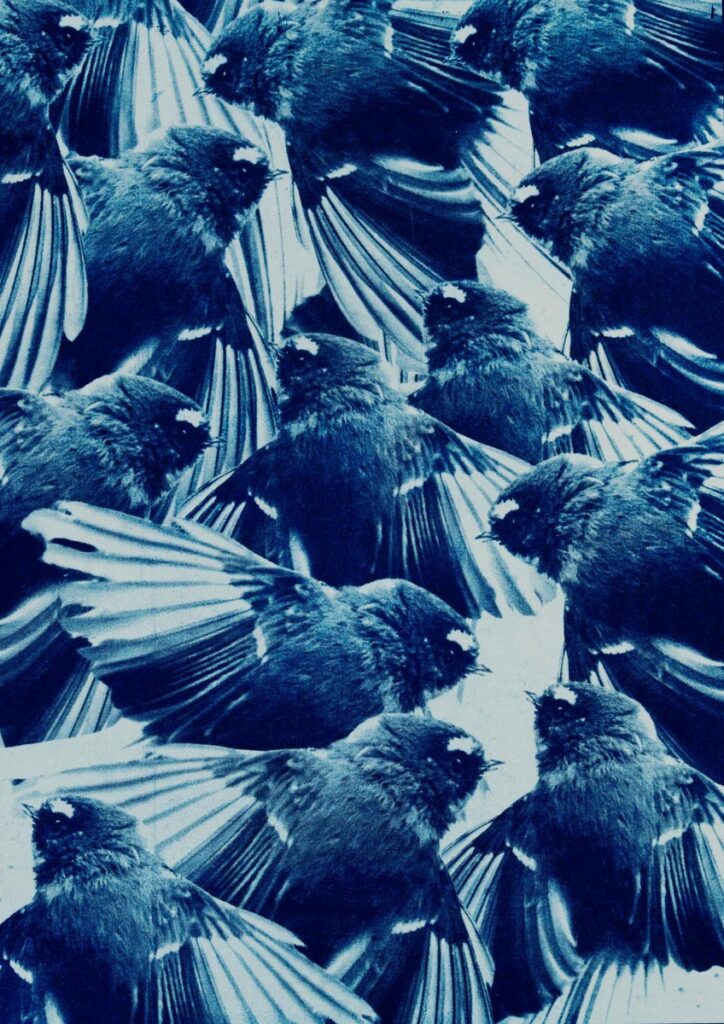
“A Flock of Fantails” – I visited Tavora with my artist/illustrator friend Katie Wilson and took a photo of a fantail with its wings and tail outspread. I used this photo stacked on itself, a technique I have used in other collage art, including one of my entries for the postcard show earlier this year, which sold. I usually only see one or two when I visit, but Tavora is undergoing native forest regeneration and I like the idea that one day there will be a multitude of native birds there again.
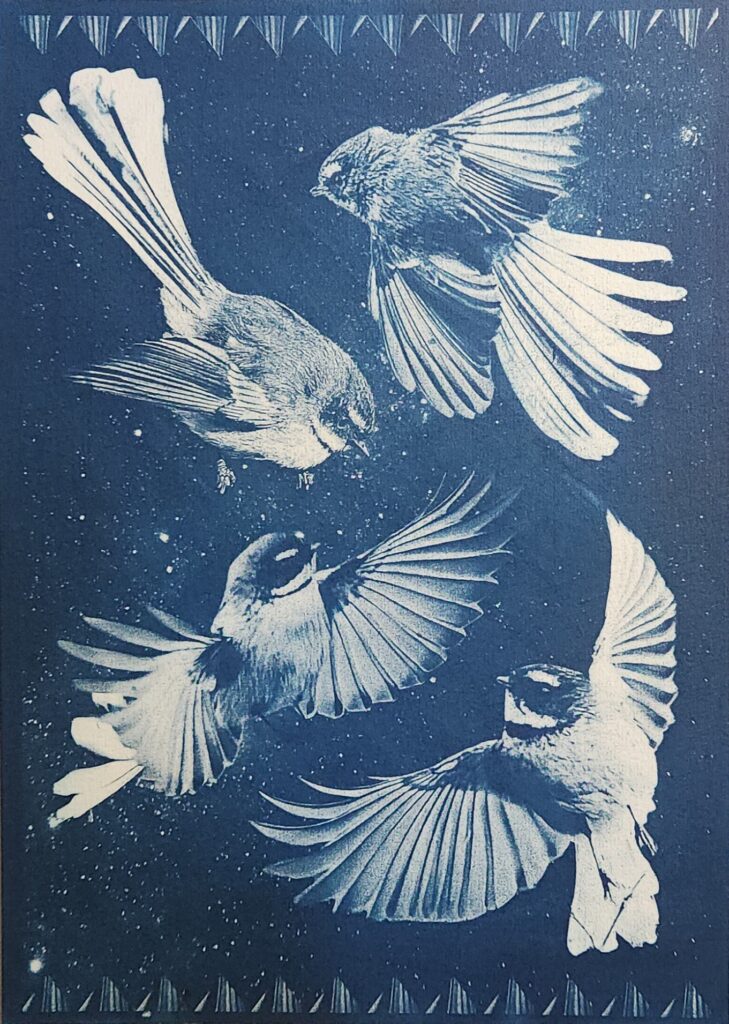
“Tipuāraki I” – This is based on a collage I made for a Matariki Flag installation project at The Learning Connexion, inspired by one of the stars in the Matariki cluster, Tipuāraki – associated with all that lives and grows in the trees/sky. For that piece, I featured riroriro and pīwakawaka, and transferred the image onto the fabric flag by a lavender oil rubbing. In this piece, I have only featured pīwakawaka, and bordered the image with triangles symbolic of maunga. The bird photos used for this piece were taken at Ross Park, Tavora Reserve, and Orokonui Ecosanctuary, and the night sky background was taken from my backyard.
“Tipuāraki II” – I used the same negative to make this print as above, but without the mountain border, which I achieved by painting the paper differently. In this one, I show the artist’s hand through loose brushstrokes, merging the feathers of the birds with the movement of my brush.
Exhibition Gallery: